


- Well, it’s been a while since we published and that is about to change. Since I spent much of last year becoming
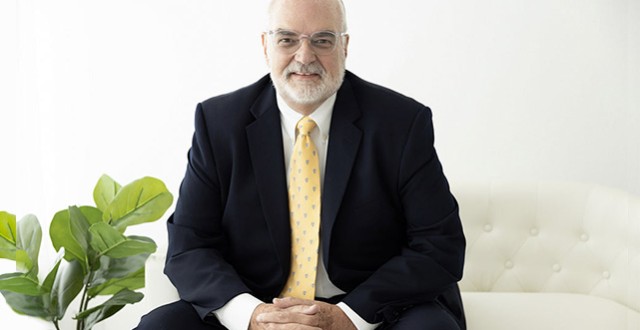 JAMS, the world’s largest private alternative dispute resolution (ADR) provider, is pleased to announce that Karl Bayer
 Linda S. Mullenix, Morris & Rita Atlas Chair in Advocacy at the University of Texas School of Law, has written “Class Ac
 Professor Amy J. Schmitz, John Deaver Drinko-Baker & Hostetler Chair in Law and Co-Director of the Translational Data An
Recent Posts

Texas A&M School of Law Expands ADR Curriculum Under New Dispute Resolution Program Director
The Texas A&M University School of Law has beefed up its ADR curriculum after welcoming Professor Nancy Welsh as Director of the Aggie Dispute Resolution Program this fall.
Continue reading...
New Petition Asks SCOTX to Consider Whether Arbitrator Exceeded His Authority
A hospital has asked the Supreme Court of Texas to consider whether an arbitrator exceeded his authority in a workplace discrimination dispute.
Continue reading...
Can Computers Be Fair? How Automated and Human-Powered Online Dispute Resolution Affect Procedural Justice in Mediation and Arbitration
Ayelet Sela, Post-Doctoral Research Fellow, Bar Ilan University Faculty of Law, has published “Can Computers Be Fair? How Automated and Human-Powered Online Dispute Resolution Affect Procedural Justice in Mediation and Arbitration,” Ohio State Journal on Dispute Resolution, Forthcoming.
Continue reading...
Fifth Circuit Rules Louisiana Non-Resident Attachment Statute May be Used Prior to Anticipated Arbitration
A United States Court of Appeals for the Fifth Circuit panel has issued an interesting ruling in a case involving arbitration.
Continue reading...Arbitration

Charlotte Garden, Co-Associate Dean for Research and Faculty Development and Associate Professor of Law at Seattle University School of Law, has authored an interesting paper titled “Disrupting Work Law: Arbitration in the Gig Economy,” 2017 University of Chicago Legal Forum 205 (2018).
Continue reading...

Mediation
The Eastern District of Texas has refused to grant a jointly filed motion for vacatur despite that provisions of the parties’ mandatory mediation settlement agreement required vacatur of portions of the court’s earlier judgment. In Ohio Willow Wood Co. v. Thermo-Ply, Inc., No. 9:07-CV-274, (E. D. Tex., February 3, 2011), the Ohio Willow Wood Company (“OWW”) filed a lawsuit against Thermo-Ply, Inc. for alleged infringement of its patent, United States Patent No. 7,291,182 (“the ‘182 patent”), which was also in the process of being reexamined by the U.S. Patent and Trade Office. Thermo-Ply filed a motion for summary judgment based on obviousness of the claims in the patent. The Eastern District of Texas granted Thermo-Ply’s motion and entered Final Judgment. Both parties appealed. The parties were ordered to mandatory mediation and reached a settlement agreement that required vacatur of portions of the Eastern District’s Final Judgment, including those portions “that rendered much of the ‘182 patent invalid.” The case was then remanded to the Eastern District of Texas in order to determine “whether its invalidity judgment should be vacated.” On remand, two additional parties also involved in a ‘182 patent dispute with OWW moved to intervene. First, the Eastern District of Texas analyzed United States Bancorp Mortgage Co. v. Bonner Mall Partnership, 513 U.S. 18, 115 S. Ct. 386 (1994), The Court stated that the “principal condition to which we have looked [in determining whether vacateur is appropriate] is whether the party seeking relief from the judgment below caused the mootness by voluntary action.” Id. at 24, 115 S. Ct. at 391. While exceptional circumstances can justify vacateur, “those exceptional circumstances do not include the mere fact that the settlement agreement provides for vacateur.” Id. at 29, 115 S. Ct. at 393. However, the Bancorp Court was very clear that it was not announcing a rule that “vacateur can never be granted when mootness is produced” by way of settlement agreement, id., and the court’s decision in this case should not be interpreted otherwise. Additionally, the Court was not addressing the policy considerations which have resulted in the development of mandatory mediation programs. The court continued its analysis by stating, In the present case the Federal Circuit placed OWW and Thermo-Ply in the mandatory mediation program. According to the Appellate Mediation Program Guidelines, “[t]he purpose of mediation is a settlement of the case. This may include a global settlement.” United States Court of Appeals for the Federal Circuit, Appellate Mediation Program Guidelines at 4 (emphasis added); see also id. at 6 (“The purpose of the mediation program is to help the parties achieve settlement.”). According to the court, Given the emphasis placed on alternative dispute resolution by Congress and the judiciary, a per se rule barring vacateur as part of the appellate mediator’s “tool box” seems short sighted. A more reasoned approach is to examine, on a case-by-case basis, the policy considerations and factors addressed in Bancorp and decisions that followed. Next, the Eastern District discussed several factors in its vacatur analysis, In addition to consideration of whether the parties have caused mootness by voluntary action, other factors considered by these courts include: the parties’ desire to avoid any potential preclusive effect; the parties’ interest in conserving their resources; the public interest in the orderly operation of the federal judicial system; and the potential to conserve judicial resources. The court concluded by stating, The invalidity judgment in this case did not require extensive time from this court, and did not require lengthy service from jurors. Given the value the judicial system places on mediation, a vacateur that affected only OWW and Thermo-Ply, saved the Federal Circuit from hearing the appeal, and finally disposed of the dispute could be justified. But this patent is the subject of litigation in other courts, and is involved in reexamination. The judgment of invalidity is now ripe for consideration by the Circuit Court. Vacating the judgment will impose costs on other parties and courts. It will only delay, not obviate the need for, consideration of the issue by the Federal Circuit. The court concludes that this is not a case where the circumstances justify vacating its summary judgment order that many of claims of the ‘182 patent are invalid as obvious. The Eastern District of Texas denied the parties’ joint motion to vacate the court’s earlier judgment. Technorati Tags: Mediation
Continue reading...Healthcare Disputes
Deadline Set for Application for Medical Liability Reform Grants
by Holly Hayes In September, President Obama authorized the Department of Health and Human Services (HHS) to allocate $25 million for medical liability reform pilot projects. Grant proposals may be submitted beginning December 20 and are due by January 20, 2010. Additional details on the grant application process are available at American Medical News. The purpose of these grants is as follows: This Funding Opportunity Announcement (FOA) solicits applications for planning grants from States and health care systems for patient safety and medical liability innovations that put patient safety first and work to reduce preventable injuries; foster better communication between doctors and their patients; ensure that patients are compensated in a fair and timely manner for medical injuries, while also reducing the incidence of frivolous lawsuits; and reduce liability premiums. States and health systems “will have to collect data to show the innovation worked and had an impact on liability claims and the cost of malpractice insurance, as well as on patient safety. So we are looking at both sides of the equation,” said AHRQ Director Carolyn M. Clancy, MD. “Ultimately, to get a grant under this program, applicants have to evaluate the impact on patient safety. That is the overarching objective.” Technorati Tags: Tort Reform, Healthcare President Obama, arbitration, ADR, law, mediation Holly Hayes is a mediator at Karl Bayer, Dispute Resolution Expert where she focuses on mediation of health care disputes. Holly holds a B.A. from Southern Methodist University and a Masters in Health Administration from Duke University. She can be reached at: holly@karlbayer.com.
Continue reading...Medical Liability Reform Debate
by Holly Hayes Medical liability reform has not been an area of focus in the health reform debate since September when President Obama directed the Department of Health and Human Services to provide $25 million for medical liability reform and patient safety planning grants. A Congressional Budget Office (CBO) report, also mentioned on Disputing (post available here) may reinvigorate the medical liability reform debate. Details on this debate and the effect of the CBO report is provided at American Medical News. The CBO report estimates that implementing a nationwide package of tort reform proposals would result in reductions of health care spending of about 0.5 percent or about $11 billion in 2009. This figure represents a reduction of 0.2 percent from lower medical liability premiums and a 0.3 percent reduction from less utilization of health care services. Technorati Tags: Tort Reform, Healthcare President Obama, arbitration, ADR, law, mediation Holly Hayes is a mediator at Karl Bayer, Dispute Resolution Expert where she focuses on mediation of health care disputes. Holly holds a B.A. from Southern Methodist University and a Masters in Health Administration from Duke University. She can be reached at: holly@karlbayer.com.
Continue reading...
Legal Research




