


- Well, it’s been a while since we published and that is about to change. Since I spent much of last year becoming
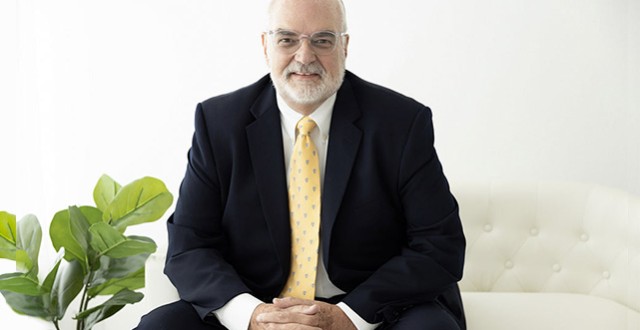 JAMS, the world’s largest private alternative dispute resolution (ADR) provider, is pleased to announce that Karl Bayer
 Linda S. Mullenix, Morris & Rita Atlas Chair in Advocacy at the University of Texas School of Law, has written “Class Ac
 Professor Amy J. Schmitz, John Deaver Drinko-Baker & Hostetler Chair in Law and Co-Director of the Translational Data An
Recent Posts
Big Morning at the Texas Supreme Court
The Texas Supreme Court issued seven opinions this morning. We’re still sorting through them, and we will comment in some detail on the ones that are applicable to this blog, but I wanted to at least note them quickly in case any is of immediate interest to any of our readers. I would also note that, after a cursory review, none seems to have anything to do with the law as it pertains to arbitration, although a few certainly do merit further comment here. In the Interest of A.M. and B.M.: discusses Texas Child Support Law. Evanston Ins. Co. v. Atofina Petrochemicals: insurance coverage dispute concerning an excess policy, a third-party additional insured, and a separate indemnity agreement between the additional insured and the policy holder. Kroger v. Subero: intentional infliction of emotional distress and malicious prosecution claims against Kroger stemming from an alleged shoplifting incident. Belt and Murphy, Joint Independent Executrixes of the Estate of David Terk, Deceased, v. Oppenheminer, Blend, Harrision & Tate: can the personal representatives of an estate bring a legal malpractice claim against a law firm that provided estate planning services for the deceased? Shupe, et al v. Lingafelter, et al: personal injury case involving a multi-vehicle accident, a trucking company, and a negligent entrustment claim. American Flood Research v. Jones: discovery sanctions case. In re Ron Smith: involves supersedeas bonds and post-judgment discovery. Technorati Tags: litigation, Texas Supreme Court, law
Continue reading...Glen Wilkerson Commentary: May 2, 2006
[ed. note: please welcome Glen Wilkerson’s first commentary on our blog] It is difficult to recall a time where there is so much transition in Texas law with respect to “insurance matters”. The reason is that the Texas Supreme Court has now pending (awaiting rulings in the next 2 to 3 months) at least four cases which could dramatically change the landscape of Texas law and our practice. The purpose of this email is to provide an alert to “watch” and be aware of these “issues” which are “out there”. 1. Insurability of Punitive Damages. Fairfield Insurance Co. v. Stephens Martin Paving, L.P. (Cause No. 04-0728, Argued November 9, 2004) The issue here is whether Texas public policy prohibits insuring punitive damages. If the Court says that punitives can not be insured, then this will significantly change how clients would be insured, how cases would be prosecuted and defended. 2. Under certain circumstances, Insurance Company Can Sue the Insured and Get Settlement Monies Back Which are Not Covered. Frank’s Casing. The Court has ruled on this case in a 5/05 group of opinion. There has been turnover on the Court. Rehearing was granted. The case was reargued on 2/16/06. The holding was a direct repudiation of Matagorda County which was a 7/2 decision the other way in 12/00. The majority held on original submission that where a settlement demand was made which was reasonable and where a demand by the insured was made to settle the case, then the carrier could pay and then have a right of reimbursement to turn and sue the insured for any non-covered items paid in the settlement provided that an reservation of rights letter had been sent out and the insured put on notice of possible reimbursement. What exactly and minimally triggers the “right of reimbursement” is unclear. This case has major implications for any client in which Davis & Wilkerson is either defense counsel or personal counsel. Therefore, on any case in which we are acting as counsel for the insured and NOT defense counsel – – Frank’s Casing is so important. There are significant pitfalls for malpractice for personal counsel unless the “Frank’s Casing” issues are understood. NOTE: prior to May of 2005 – – this “right of reimbursement” had never been the law in Texas. So this is completely new since May of 2005. 3. Coverage in Construction Defect Cases. Lamar Homes v. Mid-Continent (Cause No. 05-0832, Argued February 14, 2006) This is a landmark case involving coverage issues in the construction defect area. The Fifth Circuit Court certified three questions to the Texas Supreme Court, which the Supreme Court accepted. How the Court rules could change all coverage issue in CD cases. This could impact our practice in several ways and create new opportunities at the same time. 4. Possible Changes in Determination of the Insurance Company’s Duty to Defend. GuideOne Elite Insurance Co. f/k/a Preferred Abstainers Insurance Co. v. Fielder Road Baptist Church (Cause No. 04-0692, Argued October 20, 2005) The issue in this case is whether the Supreme Court will expand the use of “extrinsic evidence” in dealing with the duty to defend. There is an effort to enlarge the “eight corners” rule in determining whether the insurer had a duty to defend. The Supreme Court will have an opportunity to decide what evidence is now permissible in evaluating the duty to defend. Will it be limited to the pleadings alone? The Court could significantly change historic Texas procedures and practices in this area. Glen W. Technorati Tags: litigation, Fifth Circuit, Texas Supreme Court, law
Continue reading...Inverse Condemnation and Impairment of Access
The Texas Supreme Court issued one opinion this morning, explaining Texas law as it applies to inverse condemnation claims based on a state action that allegedly impairs a property owner’s access to his or her property. In this case, the Supreme Court held that since the property owner was entitled to an easement from the state to allow access to a public roadway, no impairment of access had occurred which would have given rise to a condemnation. Just because the access offered by the State is not the exact driveway the property owner wanted, says the Court, does not mean a taking has occurred. Texas Department of Transportation v. Delany Technorati Tags: litigation, Texas Supreme Court, law
Continue reading...Fifth Circuit Uses Alter Ego Theory to Confirm Arbitral Award
In 1993, an Argentine company, Bridas, entered in to a joint venture with the government of Turkmenistan, which was recently liberated from the Soviet Union. The venture went south when the government of Turkmenistan demanded a higher royalty percentage than provided by the Joint Venture Agreement. When Bridas refused to capitulate, Turkmenistan simply banned Bridas from the country. A joint venture with a government of an unstable and new country in the former Soviet Union is a situation where arbitration really does make sense, and the JVA between Bridas and the Government of Turkmenistan did in fact contain an arbitration clause, which required disputes to be arbitrated in Houston. After being banned from the country, Bridas initiated arbitration. In response, Turkmenistan dissolved the governmental entity that actually entered into the JVA, and it abolished its Ministry of Oil and Gas. The government decreed that all proceeds from oil and gas exports in the country were to be directed to a special State Oil and Gas Development fund, and the fund’s assets were declared immune from seizure. After the arbitration proceeding, which lasted several years, including twenty-one days of trial, the panel awarded Bridas an arbirtal award of $495 million. A federal district court in Houston upheld the award, but Turkmenistan appealed, arguing that the award could not be confirmed against an entity that did not exist at the time the JVA was signed. The Fifth Circuit remanded the case, instructing the district court to consider whether the alter ego theory allows confirmation of the award against the Turkmenistani entity that succeeded the entity dissolved by the government in the face of the arbitration. The original Fifth Circuit opinion in this case is reported at 345 F.3d 347 (5th Cir. 2003), and it is a seminal opinion on Fifth Circuit law with respect to confirming arbitral awards (or opposing their confirmation) under the FAA. As an aside, it is also, as of at least a couple years ago, the only reported opinion that mentions the Texas International Arbitration Act. At any rate, last Friday, April 21, the Fifth Circuit issued its second Bridas opinion. After remand, the district court reviewed the evidence, ruled that alter ego did not apply, and refused to confirm the award against Turkmenneft, the successor-entity. The Fifth Circuit has reversed that ruling (link is to .pdf), finding that alter ego does in fact apply in this case. The opinion is more about alter ego law than it is about arbitration law, but the Bridas case is an important one in this area, so it seemed worth mentioning an additional chapter in the long story. Technorati Tags: arbitration, ADR, Fifth Circuit, law
Continue reading...Arbitration
Mediation
Healthcare Disputes

Legal Research




