


- Well, it’s been a while since we published and that is about to change. Since I spent much of last year becoming
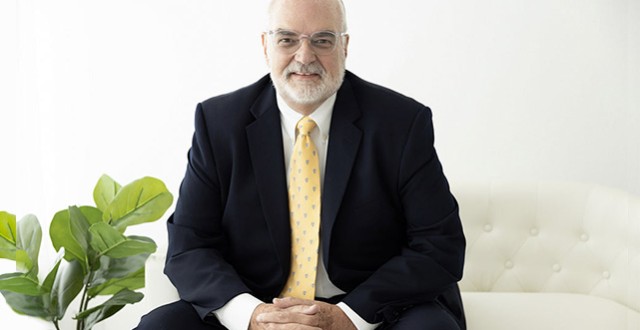 JAMS, the world’s largest private alternative dispute resolution (ADR) provider, is pleased to announce that Karl Bayer
 Linda S. Mullenix, Morris & Rita Atlas Chair in Advocacy at the University of Texas School of Law, has written “Class Ac
 Professor Amy J. Schmitz, John Deaver Drinko-Baker & Hostetler Chair in Law and Co-Director of the Translational Data An
Recent Posts
Page Perry: Arbitration or Class Action – Which is Better for Investors?
Page Perry’s Investment Fraud Lawyer Blog featured last week an interesting and thoughtful post about securities arbitration. A federal judge in Atlanta recently dismissed a class action lawsuit brought against SunTrust for fraud in the sale of auction rate securities. The case was not dismissed on the merits of investors’ claims against SunTrust, but based on technical legal requirements about what it takes to plead a claim. Those requirements are strict in securities fraud cases that get filed in federal court, especially class actions, but they do not apply to cases that get filed in arbitration. Auction rate securities are fixed-income investments in which interest or dividends are set by periodic auctions. Typically, such securities were widely marketed as conservative cash equivalents, but the broker-dealers who sold them did not disclose that their liquidity was contingent upon the success of auctions that were in turn dependent upon the financial support of the brokerages and investment banks that ran the auctions. When the auctions for these securities froze in February 2008, thousands of investors were left holding over $300 billion in illiquid securities. Many investors were eventually able to cash out due to regulatory settlements and redemptions, while others have sold their securities at a deep discount on the secondary market. “But many investors are still unable to get access to their money,” says attorney Craig T. Jones, who represents a number of investors in auction rate securities case, “and even those who have obtained partial liquidity through regulatory settlements or secondary market sales have valid legal claims for their losses.” Jones’ firm, Page Perry LLC of Atlanta, has been filing individual arbitrations of behalf of most investors, including those who were defrauded into buying auction rate securities without full disclosure of the risks. Read more here.
Continue reading...E-Discovery and the Enron E-mail Dataset Research
Last week I had the honor to guest-post at Peter Vogel‘s impressive Internet, Information Technology, & e-Discovery Blog. As some readers may know, Mr. Vogel is a frequent guest-blogger here at Disputing. Check out my guest blog! E-Discovery and the Enron E-mail Dataset Research By Victoria VanBuren, October 21, 2009. The U.S. Supreme Court granting of certiorari to former Enron CEO Jeffrey Skilling dominated the news headlines last week. Interestingly, the Federal Energy Commission (FERC), during its investigation into Enron’s involvement in the energy crisis of 2000-01, made available to the public a large database, called the “Enron Corpus.” This dataset consists of about half a million e-mail communications from former Enron senior executives and energy traders. Enron E-mail Dataset Research Because of its size and public status, the Enron Corpus is a rare and valuable tool for experimenting on text classification methods. After FERC posted it to the web, this dataset has been the subject of research by computer science departments of several universities, including the Massachusetts Institute of Technology and Stanford University. The summer of 2009, the team at TREC Legal Track, an organization co-sponsored by the U.S. Department of Defense, started conducting research on the Enron Corpus with the purpose of improving large-scale search techniques. Our Research – Bayesian Text Classifier The spring of 2009, computer science students at Texas State University David Villarreal, Thomas McMillen, Andrew Minnick, and I, under the supervision of computer forensic expert Wilbon Davis utilized the Enron Corpus to train a Bayes-based algorithm to classify the Enron e-mails into relevant and irrelevant to a given legal issue. This type of algorithm is commonly used by e-mail spam filters. The Results The team hoped that this mathematical approach would achieve better accuracy levels than the ~ 20% found using Boolean keyword searching, a method employed by many lawyers. Surprisingly, the Bayesian filter found e-mails to be known relevant at averages ranging between 43% and 66%. And as expected, the irrelevant accuracy results were even higher, averages ranging between 44% and 77%. Texas State University published the Technical Report last week and it can be downloaded for free here. Technorati Tags: law, e-discovery
Continue reading...ADR Prof: Arbitration and Mediation Bankruptcy Series
The ADR Prof Blog had recently an interesting series of posts about ADR and Bankruptcy. The posts relate to a conference hosted by the Hugh L. Carey Center for Dispute Resolution at St. John’s University School of Law titled “ADR Meets Bankruptcy: Cross-Purposes or Cross-Pollination.” Good stuff…Check them out: ADR Meets Bankruptcy -Part 1 (Oct. 9, 2009) ADR Meets Bankruptcy, Part 2 – Designing Dispute Systems (Oct. 13, 2009) ADR Meets Bankruptcy, Part 3 – Enforcing Arbitration Agreements (Oct. 14, 2009) ADR Meets Bankruptcy – Final Thoughts (Oct. 19, 2009) Technorati Tags: arbitration, ADR, law, mediation
Continue reading...Next Steps in Medical Liability Reform Demonstration Projects Announced by the AHRQ
by Holly Hayes The Agency for Healthcare Research and Quality (AHRQ) will hold a subcommittee meeting open to the public on October 26, 2009, to provide advice regarding grant funding for two demonstration projects: Medical Liability Reform and Patient Safety Demonstration Projects (R18) and Medical Liability Reform and Patient Safety Planning Grants (R21). These demonstration projects were announced on September 9, 2009, as part of The Obama Plan. Patient Safety and Medical Liability Reform National Advisory Council (NAC) Subcommittee Meeting Register Now What: Patient Safety and Medical Liability Reform National Advisory Council (NAC) Subcommittee Meeting Date: October 26, 2009, 8:30 a.m. – 4:00 p.m. Where: Holiday Inn at Capitol Hill, 550 C Street, S.W., Washington DC, 20024 For more details, go to: https://www.dbconsultinggroup.net/NACsubcommittee/. Important notice: On Oct. 17, 2009, AHRQ published an early alert summarizing two Funding Opportunity Announcements (FOAs): Medical Liability Reform and Patient Safety Demonstration Projects (R18) and Medical Liability Reform and Patient Safety Planning Grants (R21). Go to Funding Announcements for more information. The Department of Health and Human Services (HHS) is launching a new demonstration initiative to: Test models that improve patient safety and reduce preventable injuries. Foster better communication between doctors and patients. Ensure patients are compensated in a fair and timely manner; and reduce liability premiums. As part of the initiative, the Chair of the Agency for Healthcare Research and Quality’s (AHRQ) National Advisory Council (NAC) will convene a new subcommittee with diverse representation from expert and stakeholder groups to provide advice for the program. The meeting will be open to the public with an opportunity for public comment during the meeting and through Web-based submissions. The subcommittee will take the public comments into consideration when providing advice to AHRQ on the initiative. Registration Select to register for this meeting. Current as of October 2009 Technorati Tags: Tort Reform, Healthcare President Obama, arbitration, ADR, law, mediation Holly Hayes is a mediator at Karl Bayer, Dispute Resolution Expert where she focuses on mediation of health care disputes. Holly holds a B.A. from Southern Methodist University and a Masters in Health Administration from Duke University. She can be reached at: holly@karlbayer.com.
Continue reading...Arbitration
Mediation
Healthcare Disputes

Legal Research




