


- Well, it’s been a while since we published and that is about to change. Since I spent much of last year becoming
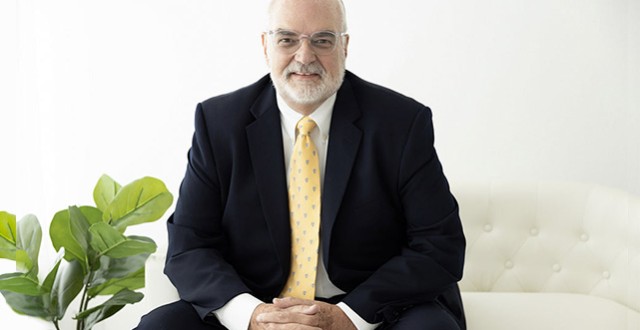 JAMS, the world’s largest private alternative dispute resolution (ADR) provider, is pleased to announce that Karl Bayer
 Linda S. Mullenix, Morris & Rita Atlas Chair in Advocacy at the University of Texas School of Law, has written “Class Ac
 Professor Amy J. Schmitz, John Deaver Drinko-Baker & Hostetler Chair in Law and Co-Director of the Translational Data An
Recent Posts
U.S. Supreme Court Agrees to Hear Class Arbitration Waiver Case: AT&T v. Concepcion
Today, the U.S. Supreme court granted certiorari to AT&T Mobility v. Concepcion, No. 09-893. The Ninth Circuit opinion is available here. The question presented is: Whether the Federal Arbitration Act preempts States from conditioning the enforcement of an arbitration agreement on the availability of particular procedures–here, class-wide arbitration–when those procedures are not necessary to ensure that the parties to the arbitration agreement are able to vindicate their claims. Find links to the briefs at the SCOTUS Wiki here. Thanks to James M. Gaitis for the heads up and sharing the following article with Paul Lurie’s listserv: Consumer Arbitration Draws U.S. High Court Review in AT&T Case, Bloomberg Business Week, May 24, 2010. Stay tuned to Disputing for more legal developments. Technorati Tags: law, ADR, arbitration
Continue reading...Mediation Channel: Resources for Mediators
Last week, Diane Levin at the Mediation Channel had an interesting post with resources for mediators (thanks for the cite!). You can find the post here. As readers may know, Diane also maintains the impressive World Directory of ADR Blogs at ADRblogs.com where she lists dispute resolution blogs from all over the world. On a related note, Diane’s Mediation Channel received recently the ABA Journal Blawg Award for 2009. Congratulations Diane! From the Disputing Team, Karl Bayer, Alyson Chaky, Holly Hayes & Victoria VanBuren Technorati Tags: law, ADR, arbitration
Continue reading...Jazz Improves Physician-Patient Communication
By Holly Hayes The American Medical News published this week Jazz offers lessons for doctor-patient interaction. This article discusses the use of jazz music to help physicians hone their patient communication skills. Dr. Paul Haidet, president-elect of the American Academy on Communication in Healthcare says”Jazz is all about harmony in communication. When jazz musicians play, they play in a way that goes along with [how] the rest of the band is playing.” Dr. Haidet and Gary Onady, MD, PhD, an internist and pediatrician, led a session at the annual meeting of the American College of Physicians to educate physicians about using jazz characteristics to improve patient and family communication. They described a physician’s range of skills within his specialty as his instrument. They compared a patient’s chart with song sheets. The riff, they said, is a physician’s rapid recall of knowledge. A physician needs to be ready to improvise when he or she walks into an exam room and encounters unexpected aspects of a patient’s illness, Dr. Haidet said. But once in the room, physicians should not think of themselves as the only person in charge, Dr. Onady said. Rather, he recommends doctors “assign solos,” allowing the patient and others in the room to discuss their concerns one at a time. Doing so makes the patient realize the physician is listening. It also enables the doctor to hear more about symptoms and possible causes and gets a more complete picture of the medical problem or concerns, said Dr. Onady, professor of pediatrics and internal medicine at Wright State University Boonshoft School of Medicine in Dayton, Ohio. He also urges physicians to pay attention to patients’ body language. For example, if the patient is staring blankly while the physician summarizes medication instructions, it’s time to try a different approach, said Dr. Onady, a jazz musician in the Eddie Brookshire Quintet. “The doctor needs to think, ‘I’m not harmonizing with the patient. What is it going to take? Am I too technical? Is it my inflection?’” He acknowledges that physicians’ limited time makes thorough discussions with patients a challenge. But he points to jazz musicians who, when improvising, have to determine very quickly where they are going to take the music. Communicating efficiently in a small amount of time is a learned skill, Dr. Onady said. Read more on our post on how patients engage more in their own care when they are encouraged to do so by their physician. We welcome your thoughts on physician/patient communication. Holly Hayes is a mediator at Karl Bayer, Dispute Resolution Expert where she focuses on mediation of health care disputes. Holly holds a B.A. from Southern Methodist University and a Masters in Health Administration from Duke University. She can be reached at: holly@karlbayer.com.
Continue reading...Law Review Article: Jurisdictional Discovery in United States Federal Courts
For those interested in discovery, Dr. S.I. Strong, Professor of Law at the University of Missouri and contributor to this blog, wrote recently an excellent article entitled “Jurisdictional Discovery in United States Federal Courts.” The piece appears in 67 Washington and Lee Law Review 489 (2010). Here is the abstract: Jurisdictional discovery ties together three principles central to federal civil procedure: the right to broad discovery, the need for liberal notice pleading and the court’s inherent power to determine its own jurisdiction. The device is also inextricably linked to complex constitutional and legislative policies regarding the jurisdictional reach of U.S. federal courts. The complicated and often hidden aspects of jurisdictional discovery make analysis difficult, and measures that may seem acceptable in theory turn out to be highly problematic in practice. Indeed, the concept of “limited jurisdictional discovery” has disappeared as plaintiffs request – and judges routinely permit – extensive and expensive discovery before defendants are even determined to be properly in front of the court. The Article begins with a discussion of the historical development and jurisprudential bases for jurisdictional discovery, then analyzes the two major structural problems with the device, namely (1) the lack of any identifiable standard regarding when jurisdictional discovery will be ordered and (2) the absence of any understanding about the proper scope of such discovery. Next, the Article describes the root causes of these structural inadequacies and proposes several ways to address the root concerns, relying on a new line of Supreme Court precedent (including Ashcroft v. Iqbal) as well as analogies to other common law jurisdictions. The paper concludes by outlining several judicial and legislative reforms that would improve the means by which U.S. federal courts establish jurisdiction. Although jurisdictional discovery is occasionally discussed in limited, subject-specific contexts, the device has not been subject to a comprehensive, in-depth analysis since the 1970s, which means that this Article fills a major gap in the literature. Furthermore, the piece is particularly timely given several recent petitions for certiorari to resolve ambiguities and circuit splits in this area of law as well as recent Supreme Court precedents regarding pleadings standards and the absence of jurisdictional hierarchies. The paper can be downloaded here.
Continue reading...Arbitration
Mediation
Healthcare Disputes

Legal Research




