


- Well, it’s been a while since we published and that is about to change. Since I spent much of last year becoming
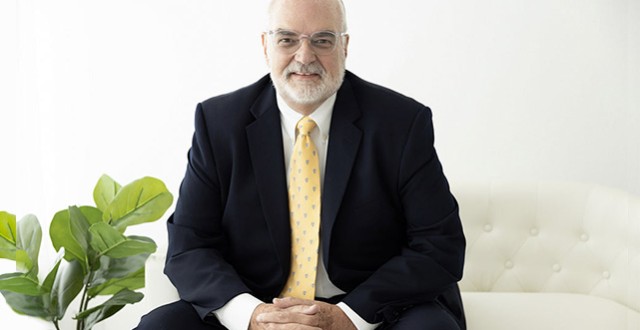 JAMS, the world’s largest private alternative dispute resolution (ADR) provider, is pleased to announce that Karl Bayer
 Linda S. Mullenix, Morris & Rita Atlas Chair in Advocacy at the University of Texas School of Law, has written “Class Ac
 Professor Amy J. Schmitz, John Deaver Drinko-Baker & Hostetler Chair in Law and Co-Director of the Translational Data An
Recent Posts
Article | IBA Revises Rules on the Taking of Evidence in International Arbitration
Disputing would like to thank Paul Lurie for alerting us to an interesting article published in Lexology on December 10th entitled IBA revises rules on the taking of evidence in international arbitration by Stephen Anway and George Von Mehren of the Cleveland, OH office of Squire, Sanders & Dempsey, LLP. Here is a summary: While the revised IBA Rules maintain important aspects of the 1999 version, they introduced several changes intended to update and modernize practice in international arbitration. Key changes include: Early consultation. Article 2.1 requires that the arbitral tribunal consult with the parties at the earliest appropriate time in the proceedings and invite them to consult with each other with a view to agreeing on an efficient, economical and fair process for the taking of evidence. Identifying key issues. Article 2.3 encourages the arbitral tribunal to identify to the parties, as soon as it considers it to be appropriate, any issues that it may regard as relevant to the case and material to its outcome and/or for which a preliminary determination may be appropriate. E-discovery. Article 3.3(a) permits a party requesting documents maintained in electronic form to identify specific files, search terms, individuals or other means of searching for such documents in an efficient and economical manner. E-production. Article 3.12(b) provides that documents a party maintains in electronic form shall be submitted or produced in the form most convenient or economical to it that is reasonably usable by the recipients. Confidentiality. Article 3.13 expands confidentiality protections in relation to produced documents, documents submitted into evidence and documents introduced by third parties. Scheduling production. Article 3.14 allows an arbitral tribunal, after consultation with the parties, to schedule document production at different phases of the arbitration (interim relief, jurisdiction, liability, quantum, etc.). Expert reports. Article 5(2) gives greater clarity concerning the contents of expert reports including the requirement to describe the instructions given to the expert and a statement of his or her independence. Oral testimony. Article 8(1) provides for witnesses to appear to give oral testimony only if their appearance has been requested by a party or the tribunal. The use of modern technology, such as video conferencing, is also permitted. Privilege. Article 9.3 lists criteria that the arbitral tribunal may consider when deciding issues of legal privilege. Good faith. Article 9.7 allows the arbitral tribunal, when assigning the costs of the arbitration (including costs in connection with the taking of evidence), to take into account the failure of a party to act in good faith in the taking of evidence. The entire article may be read here (free login required). Technorati Tags: ADR, law, arbitration
Continue reading...UT Dallas Wins National Mediation Honors for 2nd Straight Year
A team of University of Texas at Dallas (UT Dallas) students placed first in the advocate/client division and won the Dan Stamatelos National Trophy for Advocacy at the National Mediation Tournament held November 4-6 at the Drake University Law School in Des Moines, Iowa. 32 teams from 19 schools located across the nation participated in the tournament. An additional UT Dallas team placed second in the advocate/client division, making UT Dallas the only school in attendance to have two teams make it to the final rounds. Last year, a UT Dallas team also took home top honors. The tournament is sponsored annually by The International Academy of Dispute Resolution “to emphasize alternative dispute resolution (ADR) techniques and to provide a counterbalance to Moot Court and Mock Trial, which emphasize the adversarial side of the law.” A mediation round consists of advocate/client pairs from two schools, and mediators from two other schools. The competitors are given a simulated dispute to settle. Advocacy teams are judged on their ability to state their positions but show flexibility in working toward a solution. Mediators are judged on their ability to react to the demands of the advocates and clients and to facilitate a possible settlement. The students who made up the teams that represent the University this year consisted of: Taylor Brigance, senior international political economy major. Dionna Budd, junior political science major. Shannon Bumpas, senior accounting major. Ryan Campbell, senior interdisciplinary studies major. Dina Shahrokhi, senior political science major. Richard Stees, senior business administration major. Last year the UT Dallas team of Shahrokhi, Bumpas and Megan Newman (BA ’10) won the national championship in the advocate/client division. Disputing would like extend our to congratulations to the UT Dallas teams. You may read more about the award here. Technorati Tags: ADR, law, mediation
Continue reading...Health Care Mediation Lacks Physician Participation
by Holly Hayes This week, a Wall Street Journal Health Blog headline stated, “Big Challenge for Mediation in Medical Malpractice: Doctor Participation.” The post discussed a study published in the Journal of Health Politics, Policy and Law which reviewed 31 cases from New York City non-profit hospitals. The study found that although mediation in a medical malpractice context has potential benefits, no physicians participated in the cases. The authors of the study said the lack of physician participation, misses some opportunities — first, to ‘repair the relationship between human beings,’ that is, the physician and the patient (or family of the patient), Carol Liebman, co-author of the study, a professor of law at Columbia Law School and director of the school’s mediation clinic, tells the Health Blog. It also misses the chance to collect information from patients, families and physicians to fill in the blanks of what actually happened, and if there was an error, to figure out how to prevent it from happening again, she says. The mediation approach used in the study holds that any information important to someone at the table, not just what is legally relevant, can be discussed. (Information disclosed during mediation is confidential.) When you don’t have the involvement of “the person who is involved in these decisions, day in and day out, you don’t get valuable information,” Liebman says. “A lawyer’s job is to defend the case, not to reshape policy.” Mediation, she says, offers the opportunity to improve patient safety in a way litigation cannot. Of the 31 cases reviewed, 16 settled at mediation, five settled after mediation and 10 were not settled. The lawyers involved stated a busy schedule prevented physicians from participating in the mediations. Liebman, however, wonders if physicians were discouraged from attending by lawyers and administrators who might be looking ahead to the possibility of a trial. What do you think? Holly Hayes is a mediator at Karl Bayer, Dispute Resolution Expert where she focuses on mediation of health care disputes. Holly holds a B.A. from Southern Methodist University and a Masters in Health Administration from Duke University. She can be reached at holly@karlbayer.com. Technorati Tags: ADR, law, mediation
Continue reading...MCLE | Alternative Dispute Resolution Course 2011
Mark your calendars! The Texas Bar CLE presents the Alternative Dispute Resolution Course 2011, Tactical Interventions in Mediation: Preventing Bad Settlement Decisions and Impasse Minute By Minute, cosponsored by The Alternative Dispute Resolution Section of the State Bar of Texas. The live conference will take place in Houston on January 28, 2011. A video conference will be available in San Antonio on March 4, 2011. Discussion topics will include: Neuro-science and Negotiation Skills Dealing with Emotions in Peacemaking Dealing with Deeply Held Beliefs Using Neuro-science and Negotiation Skills to Get the Deal Done [Avoid Impasse] The featured speaker will be Douglas E. Noll, a “nationally recognized author, speaker and lecturer on advanced peacemaking and mediation theory and practice.” According to the brochure, This highly interactive day with Doug Noll will help you recognize what is happening and equip you with effective tools to use in the moment. Expect teams of three and four learning, watching and practicing useful skills. The course brochure is available here. You may register via mail, fax, telephone or online. Technorati Tags: ADR, law, mediation, arbitration
Continue reading...Arbitration
Mediation
Healthcare Disputes

Legal Research




