


- Well, it’s been a while since we published and that is about to change. Since I spent much of last year becoming
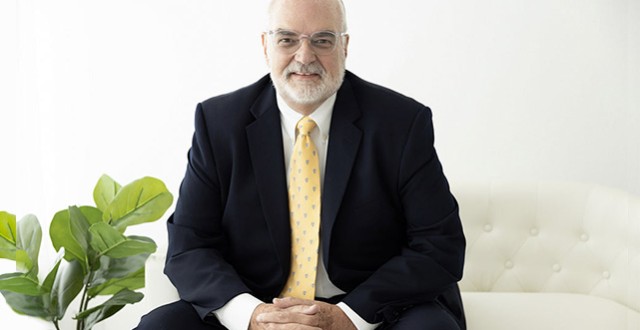 JAMS, the world’s largest private alternative dispute resolution (ADR) provider, is pleased to announce that Karl Bayer
 Linda S. Mullenix, Morris & Rita Atlas Chair in Advocacy at the University of Texas School of Law, has written “Class Ac
 Professor Amy J. Schmitz, John Deaver Drinko-Baker & Hostetler Chair in Law and Co-Director of the Translational Data An
Recent Posts
HEALTH Act Addresses Medical Liability
by Holly Hayes After voting to repeal national health reform law on January 19th, House Republicans introduced medical liability reform legislation that would cap damage awards. The Help Efficient, Accessible, Low-cost, Timely Health Care (HEALTH) Act of 2011 “would limit noneconomic damages to $250,000, and punitive damages to the greater of $250,000 or twice the amount of economic damages. It would not preempt state laws that establish higher or lower damage limits.” Read more here. Bill sponsor, Rep. Phil Gingrey, MD (R, Ga.), an obstetrician-gynecologist, said the legislation would reduce defensive medicine and save billions of taxpayer dollars. American Medical News provided additional details about the legislation: The HEALTH Act also would set a statute of limitations on filing health care lawsuits of one year after a patient discovers — or should have discovered — an injury, or three years after the injury, whichever occurs first. The bill is modeled on liability reforms that have been on the books in California since 1975. The House has adopted previous versions of the measure numerous times during the past decade, but the Senate has never followed suit. The American Medical Association and 100 other medical organizations support the bill, according to a Jan. 25 joint letter to Dr. Gingrey. AMA Board of Trustees Chair Ardis Dee Hoven, MD, said total medical liability premiums in the U.S. grew by nearly 950% between 1976 and 2009, but premiums in California grew by just 261%. “Every dollar that goes toward medical liability costs is a dollar that does not go to patients who need care.” But the president of a national organization representing trial lawyers said the bill is “beyond extreme” because of the scope of its damage caps. “By removing legal accountability, attention to safety will go down and more people will suffer injuries and death from negligent care,” said American Assn. for Justice President C. Gibson Vance. Let us hear your comments on the HEALTH Act medical liability legislation. Technorati Tags: Mediation, Medical Liability Reform Holly Hayes is a mediator at Karl Bayer, Dispute Resolution Expert where she focuses on mediation of health care disputes. Holly holds a B.A. from Southern Methodist University and a Masters in Health Administration from Duke University. She can be reached at holly@karlbayer.com.
Continue reading...Article | Should States Regulate the Mediation Profession?
Philip J. Loree Jr., a partner in the Manhasset, New York based firm of Loree & Loree and contributor to this blog, recently published an interesting article entitled Should States Regulate the Mediation Profession? The article was published in the Winter 2010-2011 edition of NE-ACR News, the newsletter of the New England Chapter of the Association for Conflict Resolution. In the article, Mr. Loree argues “proponents of state licensure [of mediators] should be careful what they wish for,” and that state licensure of mediators would likely target non-lawyer members of the profession. Mr. Loree also discusses three reasons why he believes state licensure would harm both the public and the mediation profession. Additionally, his article expands upon and refines some of the arguments Mr. Loree made in a July 30, 2009 post on his firm’s blog, the Loree Reinsurance and Arbitration Law Forum, entitled Should the States Certify and Regulate Mediators? The article is available here. What are your thoughts? Should states regulate the mediation profession? Technorati Tags: Mediation
Continue reading...SEC Approves FINRA Plan to Allow All-Public Arbitration Panels
Yesterday, the Securities and Exchange Commission (SEC) approved a Financial Industry Regulatory Authority (FINRA) plan to provide investor-claimants with an all-public arbitration panel option. According to Investment News, The approval follows a 27-month pilot program during which Finra gave certain investors the choice of eliminating the industry arbitrator on three-person panels and replace the arbitrator with a public panelist. The Dodd-Frank Act directed a study of FINRA arbitration services and, The legislation also gave the SEC explicit authority to ban or limit pre-dispute arbitration agreements. The rule change announced yesterday does not affect disputes between brokerage firms or brokers. Firm-versus-firm cases are heard by industry panels, and industry cases involving an individual broker are heard either by a single public arbitrator or majority public panel. Read more about the newly approved plan here. In September, Disputing discussed the FINRA proposal here. Tags: arbitration, FINRA, News, securities arbitration
Continue reading...S.D. of Texas Vacates Arbitral Award Based On Evident Partiality
The Southern District of Texas has held that an affidavit from a party’s attorney may be considered by a court when deciding a motion to vacate an arbitral award based upon evident partiality. In Dealer Computer Svcs., Inc. v. Michael Motor Co., Inc., No. H-10-2132, (S.D. Tex. December 29, 2010), Dealer Computer Services (Dealer Services) entered into a contract for the purchase of a computer system and service with Michael Motor Company, an automobile dealership located in West Virginia. According to the contract, any disputes between the parties were subject to arbitration “in accordance with the commercial rules of the American Arbitration Association and governed by Michigan law.” Michael Motor was provided with a computer server as part of Dealer Services’ “no-charge replacement program.” Nearly ten years later, Dealer Services informed Michael Motor that a server upgrade was required in order to support a new software release. Michael Motor refused to upgrade and filed a demand for arbitration. A three-party arbitration panel ruled unanimously in favor of Dealer Services who then sought confirmation of the award. Prior to confirmation, Michael Motor filed a motion to vacate the award after learning the arbitrator selected by Dealer Services, Butner, previously participated in an arbitration panel between Dealer and another automobile dealership, the subject of which was the same clause of a nearly identical contract. Other experts and witnesses were also designated during both arbitrations. According to the court, the arbitrator’s disclosure stated: I served on panel [sic] of three arbitrators that considered a dispute between Dealer Computer Services, Inc. and another party. I do not believe that my service on that panel creates a conflict with my serving in this case. (Doc. No. 9-13.) Along with the memorandum, Butner submitted to the AAA a response to a questionnaire with “YES” or “NO” checkboxes regarding her impartiality in the case. She also signed certifications about compensation for the arbitration and acceptance of responsibility as arbitrator. (Id. at 2-4.) On the questionnaire, Butner answered “NO” to all questions except “Have any of the party representatives, law firms or parties appeared before you in past arbitration cases?” (to which she answered “YES”) and “Have you, any member of your family, or any close social or business associate ever served as an arbitrator in a proceeding in which any of the identified witnesses or named individual parties gave testimony?” (to which she checked neither box but put a question mark in between the boxes). (Id. at 2.) Butner did not disclose any additional information about the previous arbitration panel on which she served in a case involving DCS. Michael Motor’s attorney submitted an affidavit to the court in support of his client’s motion to vacate. Dealer Services made a motion to strike his affidavit “because it contains hearsay and statements not based on personal knowledge.” The court denied Dealer Services’ motion stating, At least one district court has held that the requirements of Federal Rule of Civil Procedure 56—that an affidavit supporting summary judgment be “made on personal knowledge” and “set out facts that would be admissible in evidence”—do not apply in motions to vacate arbitration awards. Gwynn v. Clubine, 302 F. Supp. 2d 151, 159 (W.D.N.Y. 2004). Instead, affidavits in this context need only comply with the requirements of Rule 11(b), which impose a lower standard on all representations to the court. Id. at 159. Thus, affidavits supporting a motion to vacate an arbitration award need not “be based upon personal knowledge, but may be based on a reasonable belief upon inquiry into the relevant circumstances.” Id. Next, the Southern District reviewed the evident partiality standard upon which a court may vacate an arbitral award under the Federal Arbitration Act, 9 U.S.C. § 10(a)(2). According to the court, Taken as a whole, Butner’s prior exposure to the legal issues and witnesses involved in the Michael Motor arbitration creates a reasonable impression that she had prejudged at least some of the issues in the arbitration. It would be unreasonable to expect an arbitrator who had already signed an eight-page opinion ruling for a party as to how a contractual provision should be interpreted to change her mind in a subsequent arbitration and rule against that party on the exact same contractual provision. Likewise, it would be unreasonable to expect an arbitrator who had fully adopted the damages theories of an expert witness to then reject the damages theories of that same witness on similar issues in a subsequent arbitration. It is also reasonable to believe that Butner may have considered D’Ambrosio’s and Holendar’s testimony from the Venus Ford Arbitration in evaluating evidence in the Michael Motor Arbitration. Under the “practical” rather than “utmost rigor” standard of Positive Software Solutions, 476 F.3d at 283, these prior connections to DCS and to the issues in the arbitration are not mere technicalities, but strongly suggest that Butner may have prejudged the liability and damages issues in the Michael Motor Arbitration. The Court concludes that Butner’s participation in the Venus Ford Arbitration is “a significant compromising connection” to DCS, and her failure to disclose that participation constitutes “evident partiality.” See id. at 282-83; 9 U.S.C. § 10(a)(2). The Southern District then distinguished several cases by stating, The instant case is readily distinguishable from ANR Coal, Nationwide Mutual, and every other case in the Fifth Circuit and elsewhere that DCS has cited or that the Court has found. Butner, a party-appointed neutral arbitrator, failed to disclose that she was personally involved in a prior arbitration that involved the same issues of contractual interpretation and damages calculation, as well as related witnesses. Unlike in ANR Coal and Nationwide Mutual, Butner failed to disclose a connection to DCS that significantly compromised her ability to act impartially. (emphasis in original) According to the court, the arbitrator’s disclosure was insufficient to place Michael Motor on notice regarding “her potential partiality.” Although “a party seeking to vacate an arbitration award on the grounds of evident partiality generally must object during the arbitration or else waive such […]
Continue reading...Arbitration
Mediation
Healthcare Disputes

Legal Research




