


- Well, it’s been a while since we published and that is about to change. Since I spent much of last year becoming
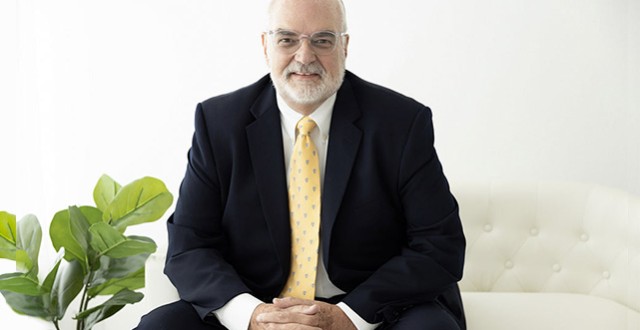 JAMS, the world’s largest private alternative dispute resolution (ADR) provider, is pleased to announce that Karl Bayer
 Linda S. Mullenix, Morris & Rita Atlas Chair in Advocacy at the University of Texas School of Law, has written “Class Ac
 Professor Amy J. Schmitz, John Deaver Drinko-Baker & Hostetler Chair in Law and Co-Director of the Translational Data An
Recent Posts
GUEST-POST | Key Mistakes Good Litigators Make in Arbitration | Omaha, Oct. 19, 2012
Dear Friends and Colleagues, Let me call your attention to an exciting-full day Arbitration seminar to be hosted by Creighton Law School on Friday, October 19, 2012. I anticipate the attendees will be a mixture of practicing advocates as well as practicing arbitrators. Breakfast and lunch will be provided, so the opportunity to network, enjoy camaraderie, and share skills and ideas, will be abundant. The location is, admittedly, Omaha. Here are three things to be said about Omaha: it is centrally located; it has the most user-friendly airport in the world (7 minutes from the Law School); and its pleasant hotels will not make you feel gouged. Three of the five panelists will be traveling from elsewhere to be part of this. For those interested in a rewarding “two-fer,” one of the panelists, Richard (“Collin”) Mangrum, author of Mangrum on Evidence, and the finest trainer on the topic of expert testimony presentation in the nation, will be doing an all-day seminar on that topic the previous day — October 18. His expected turn-out: about 100. Please pass on the word to any who may be interested. I look forward to your coming. Best regards, Jay McCauley John (Jay) McCauley, Esq., is a Resident Professor and Chair of the Arbitration Program at The Werner Institute at Creighton Law School. He has been a commercial arbitrator with the American Arbitration Association since 1998, where he serves on the Large Complex Case and Employment Panels. He has been appointed as an arbitrator in more than 130 cases, including multiple cases whose amount in controversy ranges from tens of millions to hundreds of millions of dollars in dispute, and whose parties are represented by leading advocates throughout the nation. Jay is an honors graduate of Harvard Law School, a former litigation partner of a large, Los Angeles based, international law firm, a Distinguished Fellow of the International Academy of Mediators, and a Fellow of the College of Commercial Arbitrators. He is on the editorial staff for the “Arbitration Hearing” chapter of the third edition of the College of Commercial Arbitrators Guide to Best Practices in Arbitration. He has been continuously listed for the past six years as a Southern California Super Lawyer and has been included The Best Lawyers in America for the field of ADR for several years. As an arbitrator, he follows the practice of adhering even-handedly to the ethos of the Rule of Law, in the more congenial and “user friendly” atmosphere of the arbitration hearing.
Continue reading...Health Care Conflict Resolution Part IV: Invent Options for Mutual Gain
by Holly Hayes Conflict in health care differs from conflict in other arenas because it can result in significant negative outcomes – in some cases, life or death. Part IV in our series on applying conflict resolution skills in the health care setting follows the Principled Negotiation techniques described by Roger Fisher and William Ury in Getting to Yes with a focus on “inventing options for mutual gain”. Part I in the series can be viewed (here), Part II, (here) and Part III (here). Why do we want to take the time to invent options when we disagree? Often conflict appears to have only one solution – split the pie in half — and people usually believe they know the correct answer – their answer is the right answer. Four major obstacles typically inhibit the invention of more than one option for consideration in a negotiation: Premature judgment Searching for a single answer The assumption of a fixed pie Thinking that solving the problem is “the other party’s problem” We can imagine a typical health care conflict between the Emergency Department (ED) Manager and the Manager of Environmental Services (Housekeeping) in a hospital could look like this: Emergency Department (ED) Manager: I am glad you agreed to talk with me about the housekeeping problem we have had in the ED. I think you know that I am short staffed right now and my staff cannot keep up with the minor cleaning after a patient discharge we have been doing up to now. I need your staff to take over all of the cleaning in the department. We have to take care of the sickest, most urgent patients in the hospital. Manager of Environmental Services: Well, I understand you are busy, but my department hasn’t added any new staff, why do you think we could pick up the slack for your staff? ED Manager: Well, let’s just split the jobs then, you do half of the work and we will do our best to do the other half of the cleaning. Manager of Environmental Services: I guess we can try to make that work. The managers did not “expand the pie” before dividing it – they did not invent options for mutual gain before reaching a solution. Let’s look at some other approaches where the managers take the time to invent creative options: Separate the act of developing options from the act of judging the options – brainstorming is a fairly common exercise where parties produce as many ideas as possible without considering their merit until a complete list is made. Broaden the options rather than looking for a single answer – one example of this is to invent options of different strengths, some weaker options, some stronger options for consideration; another example is to look through the eyes of someone else, for example, look at the problem through the eyes of the patient or a family member, what options would they suggest? Search for options that present opportunity for mutual gain – the secret here is to look for joint gain rather than a winner and a loser by identifying shared interests or dovetailing differing interests. Invent ways to make decisions easy for the other party – a painless choice for the other side that advances your interests is a win-win for both parties. Let’s try the conversation with the two department managers applying the techniques above. Emergency Department (ED) Manager: I am glad you agreed to talk with me about the housekeeping problem we have had in the ED. I think you know that I am short staffed right now and my staff cannot keep up with the minor cleaning after a patient discharge we have been doing up to now. We have to take care of the sickest, most urgent patients in the hospital. What do you suggest? Manager of Environmental Services: That is a problem. I wonder if our departments could split the cost of a temporary staff member to help in the short-term? Emergency Department (ED) Manager: That’s a thought. What if we spent some time streamlining the cleaning process to make the best use of the staff’s time. Your department must have a lot of ideas you could share with us. Manager of Environmental Services: We do have some ideas that have worked in other departments that could be applied here as well. Let’s form a group of your staff and my staff to look at how we can work together to solve the problem. By working together, the two managers invented options that will likely result in even more options for consideration that will benefit the departments, the hospital and ultimately the patients. The key is taking time to explore those options for mutual gain that advance the interests of both parties. We welcome your comments and invite you to share other examples of conflict in health care. Holly Hayes is a mediator at Karl Bayer, Dispute Resolution Expert where she focuses on mediation of health care disputes. Holly holds a B.A. from Southern Methodist University and a Masters in Health Administration from Duke University. She can be reached at: holly@karlbayer.com.
Continue reading...Recent Developments in International Arbitration | Sept. 2012
Following are this month’s recent developments in international arbitration law published by the International Law Office (free registration is required to view the articles): Ukraine: Mitigation of damages in arbitration practice: trite law or space for creativity? USA: Court sanctions counsel for frivolous challenge to arbitration award India: Supreme Court restricts domestic court jurisdiction over foreign arbitrations Canada: Choosing a dispute resolution mechanism Stay tuned!
Continue reading...Article | Mass Procedures in Abaclat v. Argentine Republic: Are They Consistent With the International Investment Regime?
Professor S.I. Strong (University of Missouri School of Law) has posted “Mass Procedures in Abaclat v. Argentine Republic: Are They Consistent With the International Investment Regime?” 3 Yearbook on International Arbitration __ (forthcoming 2012) – preprinted in 9 Transnational Dispute Management (Aug. 2012) The abstract is: Abaclat v. Argentine Republic is the first time that a mass claim (in this case, 60,000 Italian bondholders) has been brought in an investment arbitration. This Article considers the propriety of those proceedings from a unique perspective, namely that of regulatory law. In so doing, this Article considers the regulatory nature of class, mass and collective proceedings as well as the regulatory purposes of the investment treaty regime so as to determine whether and to what extent the Abaclat majority acted in accordance with both principles. The full article may be downloaded here. Other scholarly papers by Professor S.I. Strong are here.
Continue reading...Arbitration
Mediation
Healthcare Disputes

Legal Research




