


- Well, it’s been a while since we published and that is about to change. Since I spent much of last year becoming
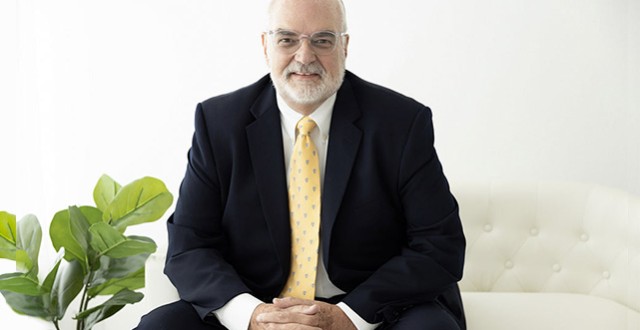 JAMS, the world’s largest private alternative dispute resolution (ADR) provider, is pleased to announce that Karl Bayer
 Linda S. Mullenix, Morris & Rita Atlas Chair in Advocacy at the University of Texas School of Law, has written “Class Ac
 Professor Amy J. Schmitz, John Deaver Drinko-Baker & Hostetler Chair in Law and Co-Director of the Translational Data An
Recent Posts

Los Angeles Courts Abolish Mediation Programs
We stumbled upon this article by Victoria Pynchon (a friend of our blog): In a tersely worded announcement on the Los Angeles Superior Court’s “Update” website, the largest court system in the world describes drastic immediate cutbacks that could bring the delivery of justice to a trickle if not a complete collapse. According to a November 27 “Court Update,” Court administrators announced that the system has been told to “permanently cut its budget by $55 million to $86 million” within the next six months. These draconian cuts will be added to more than $100 million in budgetary cuts over the past two years. Continue Reading at Forbes.
Continue reading...
CIArb Declares Universal Arbitration is the Way Forward
Leading arbitration expert Jan Paulsson argued that universal arbitration is the only way forward if arbitration is to be more inclusive and arbitrators from non-western countries are to operate on a level playing field. Speaking at The Chartered Institute of Arbitrators’ (CIArb) Alexander Lecture entitled Universal Arbitration – what we gain, what we lose on Thursday 29 November, Paulsson referred to the term ‘universal arbitration’ not in a legal context but in a sociological context. “I am referring to universal arbitration as something we may think of as being descriptive, sociological, the convergence of the way disputes are resolved so that disputants, advocates and arbitrators of any nationality can be found everywhere doing the same thing in the same way with an ever decreasing number of linguistic barriers. English is dominant, Spanish is on the ascendant, Mandarin, German and Arabic are holding their own in particular contexts, French has plummeted in a few decades – but that’s about it. A hundred other languages are irrelevant and if one of them is yours and you want to participate, you must retool” he said. Paulsson argues that overcoming the clash of cultures as well as the ability to bring arbitrators from all over the world together is what we gain from universal arbitration. He stated that potential parties in international commerce want the same thing; a desire that justice is swift, fair and at no cost to the deserving party. He stated that national lawyers begin to understand arbitration when they perceive that it is not foreign. Paulsson argues that this is how the security of international contracts have been enhanced and that for leading trading nations, it is the norm that international awards are enforced irrespective of where they have been rendered. “What we lose is that arbitration is unlikely to prosper if it becomes the exclusive domain of a group of inward looking specialists operating in a few dominant cities. It seems unlikely however, involving matters of private law that international institutions will suffer a lack of inclusiveness. Inclusiveness means not only the cosmopolitan recruitment to leadership positions, but also methods of governance that avoid entrenchment” said Paulsson. “Paulsson argues that ‘inclusiveness’ may be inspired by ideological impulses but does not depend on such impulses, rather it is a matter of success and survival if arbitration is to prosper. The increasing sophisticated global environment is incompatible with closed shops argues Paulsson. “If this is true of those who run arbitral institutions and arbitrators that purport to issue non-appealable awards then the same is also true of advocates, it is in this respect that one may observe the deepest change of all, with which the effects are only beginning to be perceived. Modern enterprise increasingly has an international dimension, those who design the intelligent infrastructure of economic activity in terms of, mobilisation of finance, corporate organisation and contractual devices will be left behind unless they operate internationally. New generations preparing themselves for entry into the arena readily understand this. The modern international marketplace for individual investment and education is the scene for astonishing changing patterns. “The days of French or German law students studying graduate studies in English speaking countries perceived as new wave over a quarter of a century ago now seems almost quaint. The new paradigm does not only include the children of such students – but now also Asians, Middle Easterners, Latin Americans and Africans, committing themselves to full cycles of studies leading to professional qualifications that can be used abroad. The mobility of young talent creates new patterns of fundamental importance as new economies flourish they create an opportunity for a new professional elite,” he said. Paulsson maintained that certain groups of arbitrators that may perceive themselves as being outsiders, lacking the resources, skills, influence and information (which they may see is at the disposal of their opponents from leading trading nations) may permanently reject arbitration due to a failure of confidence, not a clash of cultures. For this to be redressed, Paulsson argued that ‘concrete measures of intelligent, institutional reforms allowing for transparency and universal participation along with effective measures against entrenchment, need to be further developed.’ The lecture, held at the Royal College of Physicians was attended by over 170 CIArb members, ADR practitioners, members of the judiciary, their legal profession and students who gathered to listen to Paulsson – as well as to network and exchange views on topical issues of interest in the ADR community. CIArb Director-General, Anthony Abrahams, said, “I thank Jan Paulsson on behalf of the Institute for speaking at this year’s Alexander Lecture. We have been very privileged to hear the views of such a prominent practitioner.” For further information, please contact: Lucy Chakaodza Communications and PR Executive E: LChakaodza@ciarb.org T: 020 7421 7473 The Chartered Institute of Arbitrators (CIArb) CIArb is the world’s leading professional membership body for arbitration and alternative dispute resolution. A not-for-profit organisation, CIArb promotes the use of alternative dispute resolution internationally through a membership of 12,500 professionally qualified members in more than 110 countries. In addition to providing education and training for arbitrators, mediators and adjudicators, CIArb acts as an international resource centre for practitioners, policy makers, academics and those in business concerned with the cost-effective and early settlement of disputes. Jan Paulsson Jan Paulsson is co-head of Freshfields Bruckhaus Deringer’s international arbitration and public internal law groups. Jan has acted as counsel or arbitrator in a number of international arbitrations and has conducted cases under the ICC, UNCITRAL, ICSID, LCIA and AAA rules as well before the International Court of Justice. Jan is president of the International Council for Commercial Arbitration, president of the Administrative Tribunal of the OECD, vice-president of the ICC International Court of Arbitration and a board member of the AAA. He is a former president of the London Court of International Arbitration and the World Bank Administrative Tribunal. Jan holds the Michael Klein Distinguished Scholar Chair at the University of Miami and is a visiting professor at the London […]
Continue reading...
U.S. Supreme Court Grants Certiorari to Yet Another Class Arbitration Case
On December 7, 2012, the U.S. Supreme Court granted certiorari to Oxford Health Plans LLC v. Sutter, Docket No. 12-135. The case below is: Sutter v. Oxford Health Plans LLC, 675 F.3d 215 (3d Cir. N.J. 2012). The questions presented is as follows: In Stolt-Nielsen v. AnimalFeeds International Corp., 130 S. Ct. 1758, 1776 (2010), this Court made clear that “class-action arbitration changes the nature of arbitration to such a degree that it cannot be presumed the parties consented to it by simply agreeing to submit their disputes to arbitration.” In this case, an arbitrator concluded that the parties affirmatively consented to class arbitration on the basis of a contract provision stating: “No civil action concerning any dispute arising under this Agreement shall be instituted before any court, and all such disputes shall be submitted to final and binding arbitration.” The question presented is: Whether an arbitrator acts within his powers under the Federal Arbitration Act (as the Second and Third Circuits have held) or exceeds those powers (as the Fifth Circuit has held) by determining that parties affirmatively “agreed to authorize class arbitration,” Stolt-Nielsen, 130 S. Ct. at 1776, based solely on their use of broad contractual language precluding litigation and requiring arbitration of any dispute arising under their contract. Stay tuned!
Continue reading...
Book | Class, Mass and Collective Arbitration in National and International Law
Professor S.I. Strong (University of Missouri School of Law) has just posted a draft chapter from her upcoming book, Class, Mass and Collective Arbitration in National and International Law, on SSRN. The title will be published by Oxford University Press in spring 2013 and will be the first monograph dedicated to large-scale arbitration. Professor Strong told us that the chapter posted addresses various issues relating to the interpretation of arbitration agreements and the use of waivers, but the book is much more comprehensive, discussing a variety of concerns arising in the U.S. and other legal systems. Stay tuned!
Continue reading...Arbitration
Mediation
Healthcare Disputes

Legal Research




