


- Well, it’s been a while since we published and that is about to change. Since I spent much of last year becoming
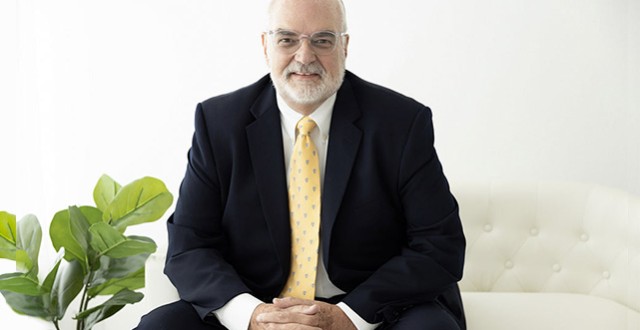 JAMS, the world’s largest private alternative dispute resolution (ADR) provider, is pleased to announce that Karl Bayer
 Linda S. Mullenix, Morris & Rita Atlas Chair in Advocacy at the University of Texas School of Law, has written “Class Ac
 Professor Amy J. Schmitz, John Deaver Drinko-Baker & Hostetler Chair in Law and Co-Director of the Translational Data An
Recent Posts
Texas Supreme Court Reverses Richmont Holdings Decision
On Friday, the Supreme Court of Texas reversed and remanded the Second District in Fort Worth’s ruling in Richmont Holdings, Inc., et al. v. Superior Recharge Systems, L.L.C., et al. (No. 12-142). The interlocutory appeal arose after Richmont Holdings purchased the assets of Superior Recharge Systems. A provision in the purchase agreement stated: “Any controversy or claim arising out of or relating to this Agreement, or the breach thereof, shall be settled by binding arbitration.” As part of the asset purchase, one of Richmont Holdings’ affiliates, Superior Acquisition, agreed to hire Superior Recharge Systems owner and manager Jon Blake. An employment contract stated Blake would serve as general manager of Superior Acquisition for a period of two years and included a non-compete clause. The employment agreement did not include an arbitration provision. After six months, however, Blake’s employment with the company was terminated. Blake filed a lawsuit against Richmont Holdings, Superior Acquisition, and others (Richmont) seeking damages related to his employment agreement. Richmont answered Blake’s complaint and then filed a motion to compel arbitration 18 months later. Richmont also submitted a copy of the asset purchase agreement in support of the company’s motion to compel arbitration. Blake responded by stating Richmont previously waived its right to arbitrate by substantially invoking the judicial process. The trial court agreed with Blake. On appeal, The Second District of Texas affirmed the trial court’s holding on different grounds. According to the Fort Worth court, Richmont failed to establish that an arbitration agreement applied to the parties’ dispute. The court stated the employment agreement dispute arose separately from the asset purchase agreement. Because of this, the appellate court did not reach the waiver issue. Richmont appealed the matter to the Supreme Court of Texas stating the Second District incorrectly determined that the parties had no valid agreement to engage in arbitration. Blake conceded that the arbitration provision in the parties’ asset purchase agreement applied to the dispute but again stated that Richmont waived its right to arbitrate. According to the Texas Supreme Court, The court of appeals’ conclusion that the arbitration provision in the asset purchase agreement has no application to Blake’s lawsuit is contrary to the parties’ contentions and has no support in the record. Moreover, the court’s failure to recognize the arbitration agreement here is contrary to our precedent, which mandates enforcement of such an agreement absent proof of a defense. Finally, the case was reversed and remanded to the Second District Appeals Court for consideration of Blake’s waiver defense.
Continue reading...
Picture It Settled® Launches Today at LegalTech New York
Disputing contributor Don Philbin launches the full version of Picture It Settled, a new tool for providing predictive analytics for the negotiation of litigated cases, at LegalTech New York today. According to the press release: Picture It Settled software is a highly intelligent predictive analytics tool that guides inside and outside counsel through the negotiation process, based on deep data harvested from thousands of cases. The online-accessible technology was created by a team of attorneys and statisticians led by Don Philbin, a nationally recognized attorney-mediator based in San Antonio. This full launch follows the success of Picture It Settled Lite, the popular mobile app released in 2011. Using neural networks, probability theory and behavioral patterns, Picture It Settled can predict what an opponent will do, ultimately saving parties’ time and money by streamlining negotiations. The software’s unique Settlement Prophet application estimates when parties are likely to settle and for what amount with high accuracy. Picture It Settled® doesn’t replace honed intuition or legal expertise. Instead it guides decision-makers by quickly modeling anticipated reactions. Users benefit from three key features: (1) scenario planning, (2) negotiation move planning, and (3) offer projections. Case results entered into the Picture It Settled dataset range from fender benders to intellectual property disputes in various jurisdictions, with settlements from $250 into the hundreds of millions of dollars. Built with security features, Picture It Settled is layered with Gazzang for security levels equal to those used to protect health and financial records. We invite you to learn more about Pictured It Settled or download the iTunes App.
Continue reading...
Taming the Wild West of Arbitration Ethics
Kristen Blankley, Assistant Professor at the University of Nebraska College of Law has authored an interesting article entitled Taming the Wild West of Arbitration Ethics, Kansas Law Review, Forthcoming. In her article, Professor Blankley examines legal ethics in the arbitral forum. Here is the abstract: The boundaries of ethical behavior in litigation are well known and understood in the legal community. Attorneys and parties cannot lie under oath, are prohibited from destroying documents, and are prohibited from tampering with witnesses. The criminal law and rules of attorney ethics have long prohibited these practices in order to ensure that the public system of dispute resolution (i.e., court) is fair by ensuring truthfulness and the preservation of relevant evidence. Whether these rules apply in the arbitral forum, however, is unclear, at best. The criminal laws dealing with perjury and tampering of witnesses and documents generally only apply to “official proceedings,” and arbitration likely does not fall within the definition of an “official proceeding.” The revisions to the ethics rules do cover the arbitral forum, but the criminal law has been slow to catch up. This paper recommends revising the definition of “official proceedings” to include the arbitral forum. Such revision would make the arbitral forum fairer, make the ethical rules and the criminal law more congruent, and it would fill an “accountability” gap that arises by operation of the increased operation of arbitral immunity laws. Revising the criminal law in such a manner, on a state-by-state basis, would create uniformity across the nation and hold accountable those (attorneys and non-attorneys alike) for engaging in conduct that is properly punishable in the litigation forum. The article is available to download at the Social Science Research Network.
Continue reading...
Impaired Healthcare Executives Policy Statement
The American College of Healthcare Executives (ACHE) updated their policy statement on Impaired Healthcare Executives in November 2012. We posted here on impaired physicians,but have not posted previously on impaired executives. The Joint Commission (TJC) requires that all hospitals have a process in place to identify and assist staff physicians with health and behavior problems. On its website, the ACHE Statement of the Issue begins: The American College of Healthcare Executives recognizes that impairment is a significant problem that crosses both societal and professional boundaries. For healthcare executives, impairment can be defined as a condition that limits or diminishes a healthcare executive’s ability to perform his or her responsibilities and duties in accordance with the prevailing professional standards and expectations. Some examples of causes of impairment include alcoholism, substance abuse, chemical dependency, mental/emotional instability, cognitive impairment and illness. The Policy Position references the preamble of the ACHE Code of Ethics which states, “Healthcare executives have an obligation to act in ways that will merit the trust, confidence, and respect of healthcare professionals and the general public. Therefore, healthcare executives should lead lives that embody an exemplary system of values and ethics.” The updated policy statement asserts healthcare executives have the following ethical and professional obligations: Maintain a personal health that is free from impairment. Refrain from all professional activities if impaired. Seek assistance, whenever there is uncertainty, in understanding whether impairment exists. Expeditiously seek treatment if impairment occurs. Urge impaired colleagues to expeditiously seek treatment and to refrain from all professional activities while impaired. Support peers who identify healthcare executives in need of help. Intervene and report the impairment to the appropriate person(s) should the colleague refuse to seek professional assistance and should the state of impairment persist. Review applicable legal obligations to report the impairment to ensure compliance with federal and state requirements (such as those required by licensing boards). Recommend or provide, within one’s employing organization, confidential avenues for reporting impairment, and either access or referral to treatment or assistance programs. Consider establishing an organizationwide program or committee that coordinates a reporting process and also reviews, addresses and prevents impaired executives. Recognize that individuals who have successfully received treatment for impairment and are no longer deemed impaired should be considered for employment opportunities for which they are qualified. Assist recovering colleagues when they resume their professional activities. Urge the community to provide information and resources for assistance and treatment of alcoholism, substance abuse, mental/emotional instability and cognitive impairment as needed and as appropriate. Raise the awareness of key stakeholders (such as employees, governing board members, etc.) on impairment issues and the resources available for assistance. A study published in the Journal of the American Medical Association (JAMA) conducted by researchers from Massachusetts General Hospital found more than 31 percent of the 2,000 doctors who responded don’t turn in colleagues who are impaired or incompetent. The study surveyed nearly 3,000 doctors across multiple specialties. The survey reported that 17 percent of surveyed doctors had encountered an incompetent or impaired colleague in the past three years. Only two-thirds actually turned those doctors in and 69 percent of doctors said they had knowledge of the process for reporting a colleague who was compromised. Holly Hayes is a mediator at Karl Bayer, Dispute Resolution Expert where she focuses on mediation of health care disputes. Holly holds a B.A. from Southern Methodist University and a Masters in Health Administration from Duke University. She can be reached at holly@karlbayer.com.
Continue reading...Arbitration
Mediation
Healthcare Disputes

Legal Research




